|
“If we had no winter, the spring would not be so pleasant. If we did not sometimes taste adversity, prosperity would not be so welcome.”
–Anne Bradstreet, American poet, from ‘Meditations Divine and Mortal’ (1867), which emphasizes life’s contrasts
|
If You’re Longing for Fall-Planted Bulbs, There’s Hope Ahead!
|
|
|
|
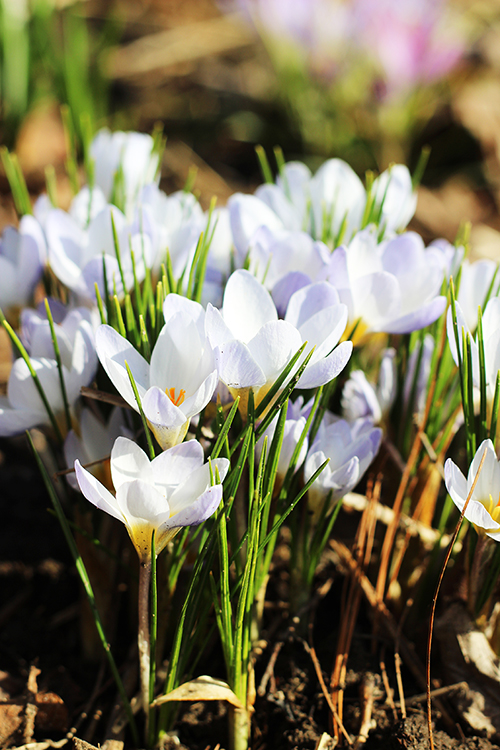
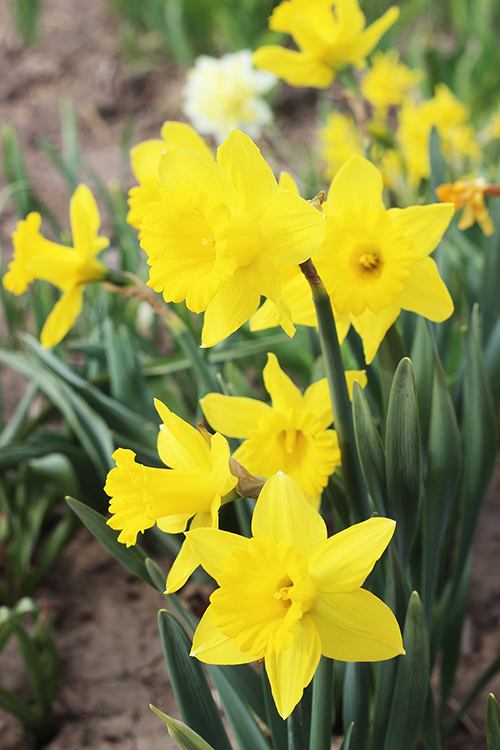
Though we won’t start shipping daffodils, tulips, hyacinths and other fall-planted treasures till October, it’s never too early to start making your plans and wish-lists. We’ve just updated our website with varieties we’re confident we’ll have and will be continually updating it as we receive more information from our growers, so check back over the coming months – and we’ll highlight newly-added varieties often in our newsletter, as usual!
|
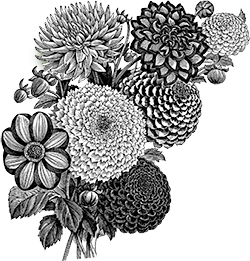
More New Heirloom Dahlias!
|
|
|
Check out the beautiful heirloom dahlias on our website - all of the new ones are there, along with many others.
Beginning next year, we will have fewer dahlia varieties and will no longer be offering Dutch grown dahlias. We are gearing up our own local dahlia production with varieties that have previously been sourced from Dutch growers. If there is a dahlia you love, it’s best to order this year in case it is not available next year.
Here is the second group of new dahlias for this year…
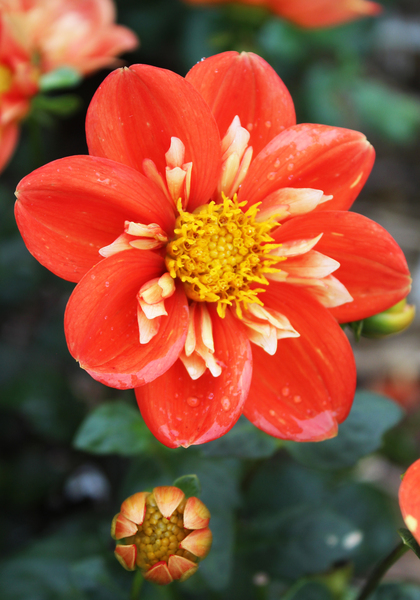
Alstergruss, 1963
Alstergruss may be the most famous variety of dahlia bred by Rolf Wagschal, son of Germany’s Wagschal Nursery founder. This clump-forming, vibrant red-orange flower with white ruffled collarette petals and yellow center has earned its fame. The compact height of Alstergrus makes it an ideal dahlia for containers or the front of flower beds. Its open, bright flowers are great for attracting bees and butterflies. Collarette, 14-18”, from Holland.
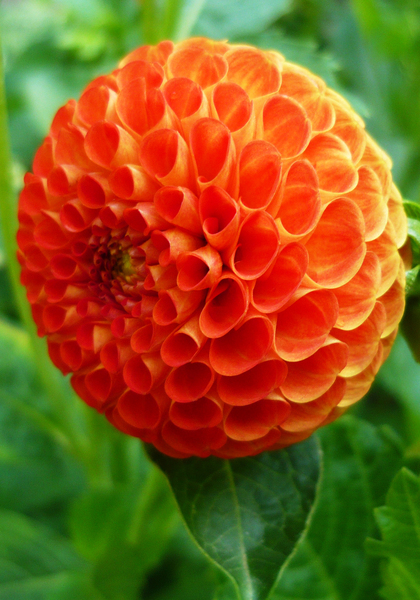
Bantling, 1979
Perfect rows of rolled yellow-orange petals form a small round pompon shape. Their neat appearance adds geometric interest to a garden and vase. Its orange petals lend a bit of whimsy to this lollipop-like flower. This 2” flower was created by Dutch hybridizer G. Aartsen. Pompon, 30-40”, from Holland.
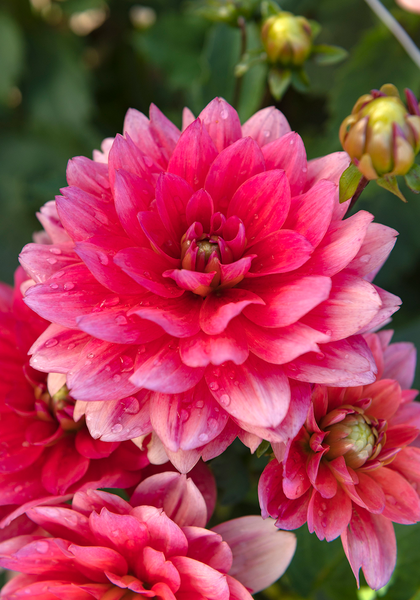
Berliner Kleene, 1967
This spectacular beauty blooms abundantly on a fairly low, bushy plant that is great for a small garden, border, or in pots. The 4-6” blooms add a cheerful touch of pink to a sunny mid-summer garden. Decorative, 15-16”, from Holland.

Ludwig Helfert, 1974
The warm orange tones of Ludwig Helfert’s 6-8” semi-cactus flowers range from light orange outer petals to a darker center. Its glowing petals, combined with its semi-cactus form, plum-colored stems, and green foliage will create a showy effect in a whimsical bouquet. In the garden, it contributes a burst of color amongst darker foliage plants. Semi-cactus, 30-40”, from Holland.
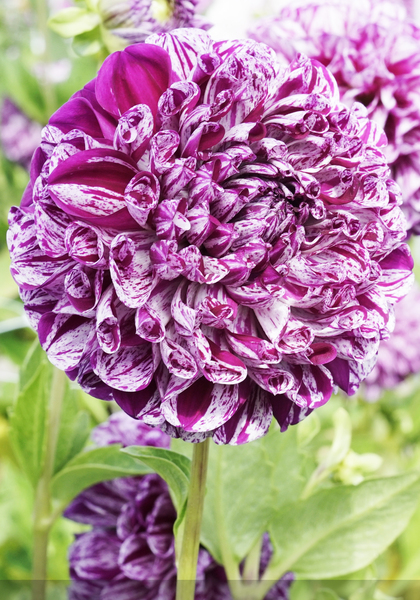
Marble Ball, 1974
The purple and white marbled coloring and ball shape make Marble Ball an appropriate name. Originating in California, it is easy to imagine this novelty variety in a sunny garden. This 3-4” ball type bloom also holds up well to brighten a bouquet in a vase. Ball, 2.5-4”, from Holland.
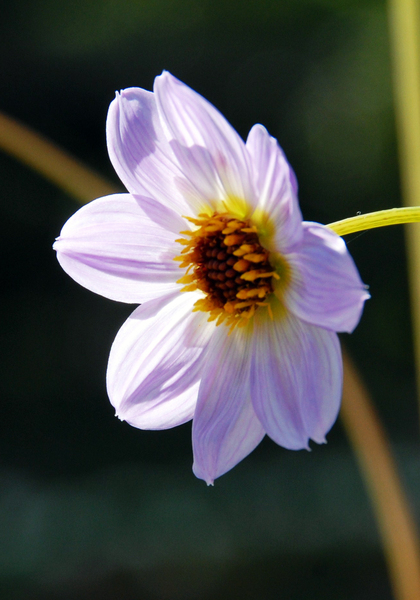
merckii dahlia, 1838
Merck’s dahlia was named by German botanist Johann Georg Christian Lehmann in 1838, likely honoring the Merck family of Hamburg, known for their botanical garden. Originally from the cool, damp Mexican highlands, merckii is a hardy variety that tolerates some dappled shade. Its single flowers bloom in varying hues of pink, purple or white on wiry, branched stems with pinnate (lobed) foliage and a center of yellow or purple. The 3” flowers create a colorful cosmo-like bouquet in the garden. Single, 5-8’, from Holland.
|
Are you storing Dahlia tubers?
|
|
|
If you have not checked stored tubers and bulbs being stored indoors for the winter, this is a good time to do so. It has been a cold winter in much of the US, so check the temperature where they are being stored - 40-45º is best. Allow excess moisture to escape (look for condensation) or sprinkle/spray some water on the tubers if they seem to be shriveling. We need to wait until all danger of frost is past - a few months for some parts of the country - so plan to check them a couple more times before they are ready to be planted outside.
|
Crinum Varieties Great for Southern Gardens and Pots
|
|
|
|
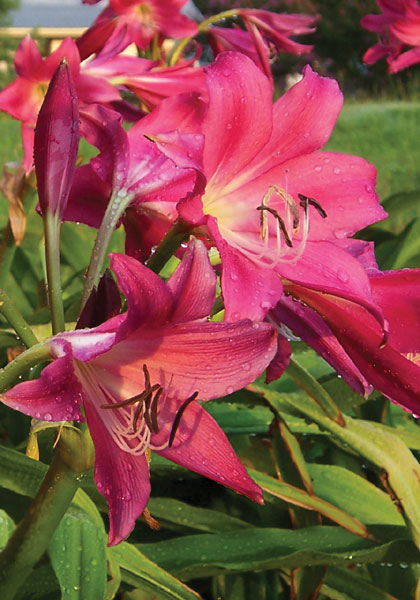
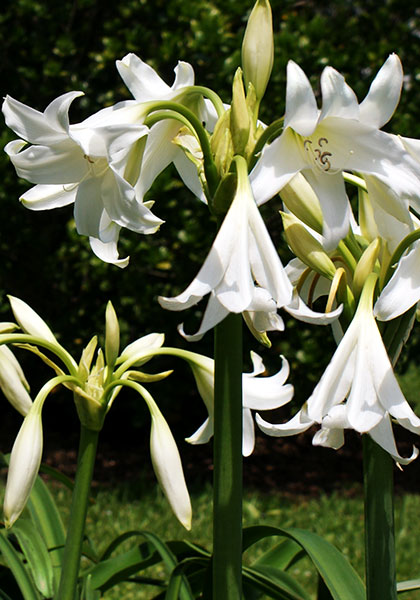
Crinums are native to tropical and subtropical regions. Plants with strap-like leaves and groups of lily-like flowers can grow to be rather large - 24-36 inches or more. They may not bloom the first season after planting because they are slow to re-establish as the bulbs are putting their energy into developing its fleshy, permanent roots, but are likely to thrive once established.
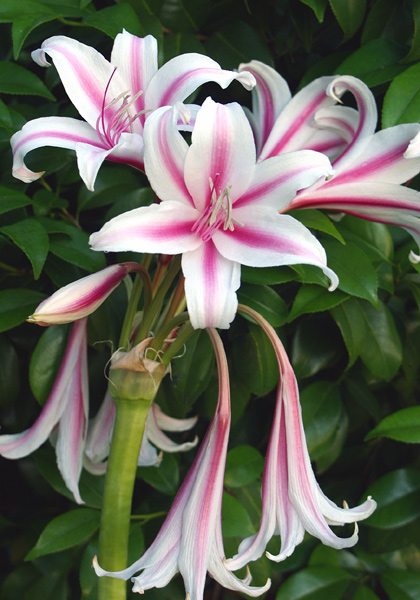
The pink flowers of Ellen Bosanquet Crinum, the white and pink flowers of Milk-and-Wine Lily (Crinum x herbertii), and the white flowers of the powellii ‘Album’ (Crinum powellii) are available to order for spring planting. Powellii is the most cold-hardy of the three we offer. Friend of Old House Gardens, Jenny Rose Carey says in her “Essential Guide to Bulbs” (Timber Press, 2025) that “Crinum’s look lovely on the sunny side of shrubs, especially shrubs with dark green leaves that show off their light-colored blooms. Wherever you plant them, leave them space to grow.”
OUTDOORS — In zones 7-11, choose a warm spot with well-drained to average soil, plenty of sun, and — in hotter areas — a bit of afternoon shade. Space 12-24 inches apart or more, remembering that crinums have long, exuberant foliage, they don’t like to be disturbed, and in time they’ll develop into ever-bigger clumps. Plant so the neck of the bulb is just below the soil surface. Water well.
IN POTS — Where they’re not hardy, crinums can be grown in pots. Choose a clay pot that’s not too big. Spread the roots and set so the bulb neck is just above the surface of the potting soil. Set the pot in full sun and keep soil lightly moist but never soggy. When frost threatens in fall, bring inside to grow in a sunny window. In late spring, trim leaves and move outside. You can also store potted crinums in the basement over the winter.
|
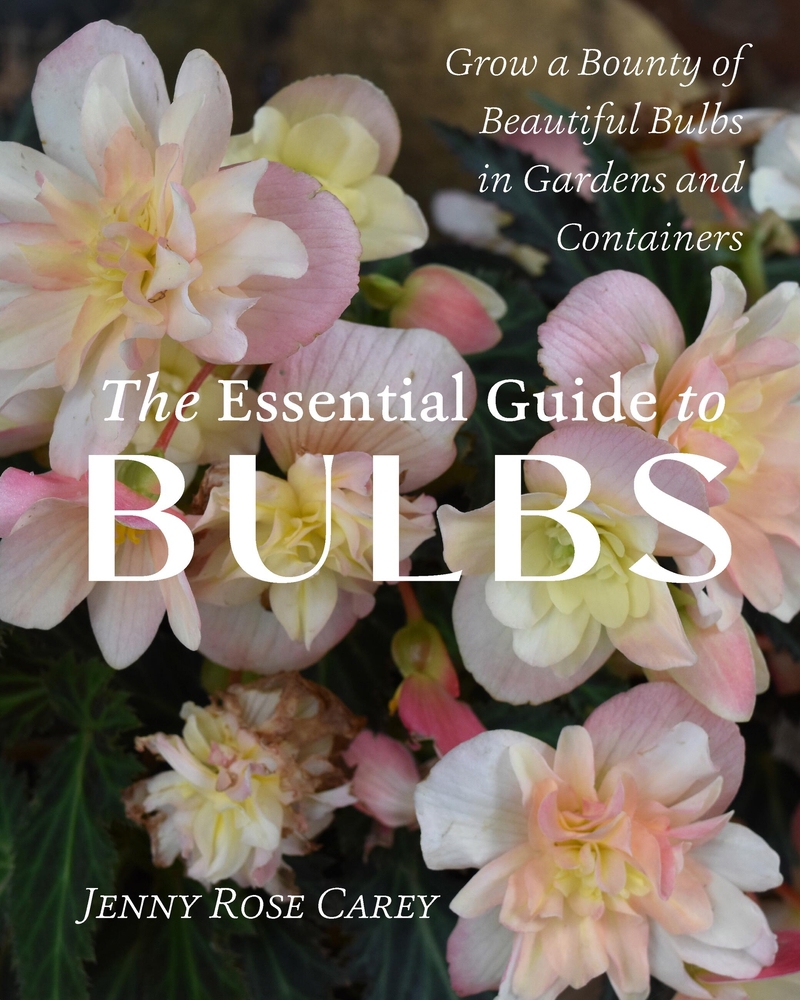
The Essential Guide to Bulbs by Jenny Rose Carey
|
|
|
“Trends in gardening come and go… Gardeners have loved growing flowers from bulbs for centuries, it’s a trend that has always been in fashion, so to speak.”
Every question you ever had about bulbs is likely to be answered in this comprehensive guide to bulbs. Jenny Rose Carey - friend of Old House Gardens - shares her deep knowledge and genuine joy for growing bulbs through clear explanations, practical advice, and stunning photographs drawn from visits to renowned gardens.
The book begins with a helpful foundation: the naming of plants, history of bulbs, bulb types and an assessment of growing difficulty. The next section leads readers through an informative “parade” of bulbs with detailed descriptions of both fall-planted and spring-planted bulbs, followed by tips for including bulbs into the garden.
Many of the heirloom blooms seen on our site are featured in the book. Among them are Cyclamen hederifolium, Narcissus ‘Xit’, Tulipa ‘Keizerskroon’, and more in the Fall-planted bulb section. Some of the many OHG Spring-planted bulbs in the book are Crocosmia x crocosmiiflora ‘George Davison,’ Lilium ‘Pink Perfection,’ and Dahlia ‘White Aster’.
|
An Old House Garden
|
|
|
|
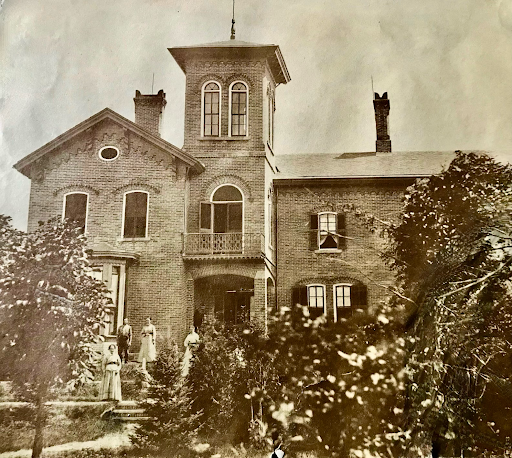
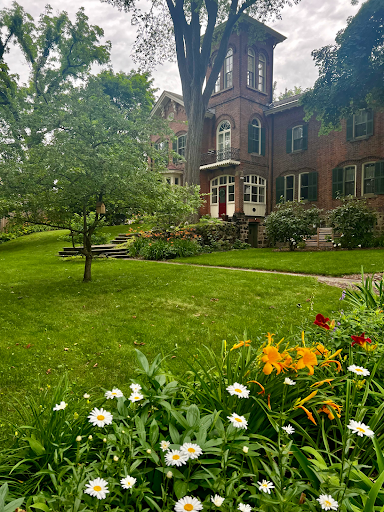
“Woodlawn” was built between 1861 and 1865 by Christian Eberbach in what was rural Ann Arbor at the time. The Eberbach family lived on the farm until the 1920s when it was divided into 80 parcels. We purchased the property in 2016 and I have been “head gardener” since then. Christian Eberbach was the first trained pharmacist in Ann Arbor and an owner/founder of several business. He even was an elector for Abraham Lincoln’s second term and served as mayor for one term.
No original plans for the garden have been found, but there are a few old pictures and other clues that help to plan plantings: It was built during the Civil War by a pharmacist from Germany who named the country estate and farm “Woodlawn.” A search through Old House Gardens archives led to an article about “Grandmother’s Gardens” from the late 1800’s where “informal, mixed flower gardens arose as a reaction against Victorian carpet bedding.” Since Woodlawn was built as a farmhouse and the farm would require a lot of physical labor, the gardens would have been less elaborate than the Victorian-era gardens of many wealthy families.
The archived article continues: “Old-fashioned plants were an essential part of grandmother’s gardens, too. Slowly but surely, gardeners turned away from the brightly colored exotic annuals of the Victorian era in favor of flowers that had a long history in gardens, especially perennials such as peonies and iris, self-sowing annuals such as larkspur and poppies, and bulbs that would return and multiply year after year such as daffodils and snowdrops.” I have made sure these flowers have a strong presence throughout my garden.
My first instinct as caretaker maintaining the history of this garden was to find some medicinal plants to include in the garden as a nod to the pharmacist who built it. Before I planted anything, I discovered Bloodroot and trillium were already growing along one edge of the property. Both were used by Native Americans for their medicinal properties. Even the snowdrops that popped up around the base of our trees in early spring were used in Europe as a folk remedy before they were brought to America - Christian Eberbach may have learned to use them during his training in Stuttgart, Germany.
A list of “standard” heirloom vegetables would have been grown for the family in the kitchen garden, along with herbs grown for flavor and for their medicinal value. Although our kitchen garden does not get full sun all day, I am able to grow some of the vegetables that might have been grown by the Eberbachs.
Large lawns on all sides of the house get afternoon shade in summer. On a hot summer afternoon it is nice to imagine the Eberbach family relaxing in the shade or having a family celebration as a reminder that many people have loved this garden in the past. Each story it holds in its hardscape, trees, shrubs, and flowers lends a little more personality and character for us to enjoy and for those who come after.
If you are planning an old house garden, we research the history of our bulbs and include the year that each variety was hybridized in its description. If you are ready to learn more about gardening and garden restoration, the books we recommend page is full of book recommendations for historic landscaping and plants.
We love to hear your “old house” stories. You can email them to us and let us know if we have permission to use your story and/or pictures for our newsletter and social media - we only use first name, last initial, and city, state.
|
To Make Sure Our Newsletter Reaches You Safely . . .
|
|
|
Please add newsletter@oldhousegardens.com to your email address book or safe/approved list today.
|
Follow Old House Gardens - Heirloom Bulbs
|
|
|
Follow us on Facebook and Instagram.
|
To Unsubscribe
|
|
|
We hope you enjoy our monthly Gazette, but if not UNSUBSCRIBE here and we’ll drop you from our list immediately.
|
|